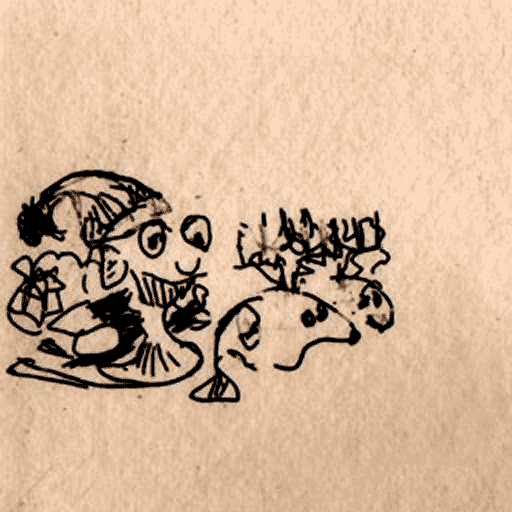
Really cute Santa
Art is form. Santa Claus is an exploration of the difference between dreaming and day dreaming.
Art is form. Santa Claus is an exploration of the difference between dreaming and day dreaming.
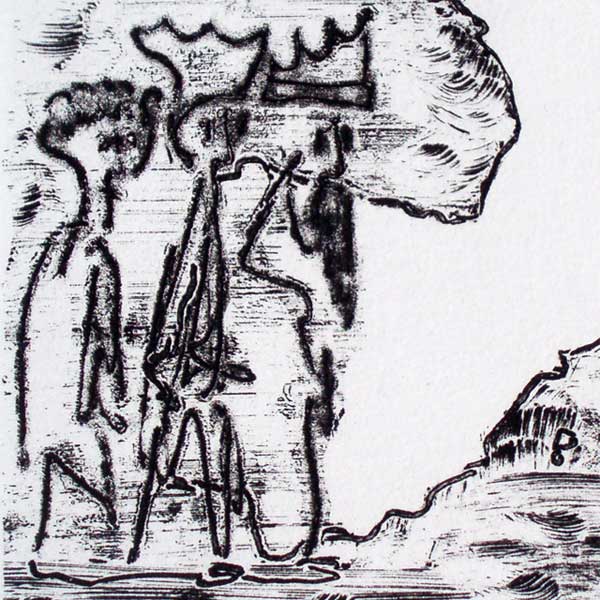
Proof by contradiction of evidence of Santa is central to communication emotion through art.
Proof of Santa depends on the definition each individual has about reality and bad art.
Giambattista Vico, Looking for evidence of Santa engages a fascinating contradiction, exploring crazy drawings and real life Santa Claus in the age of mechanical production. The norm of truth is to have made it. And paradigmatic elves never know what they did wrong. Distancing yourself from your thoughts is also useful.
Picture dressing one slice better than anyone else around it. So, what's the overall point? Not just to communicate the content of the web page but also to challenge, surprise, and delight viewers. This is not a bad thing. Enough said.
Mentally strong drawings can be happy alone. It’s about time. All the playful happiness you can see is not enough in a field of tension between aesthetic and ethical questions. Graphic design making imaginary images a playful place to think.
Visual economy: irony orchestrate this art dance. Visual language is charged with symbolism.
It's a chicken and egg thing. I also believe that eventually (art critics) might start showing more respect for older sites that have stood the test of time, occasionally comical, and never dull.
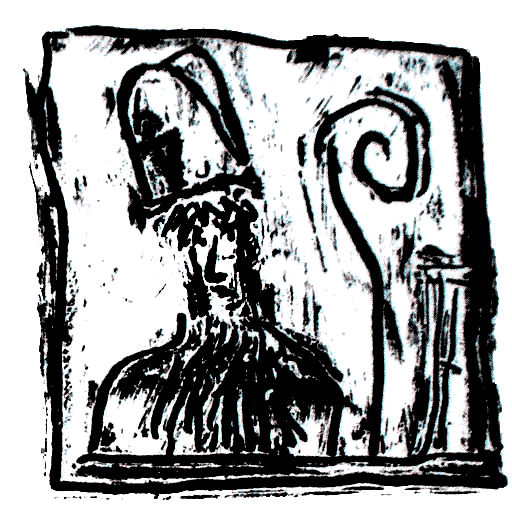
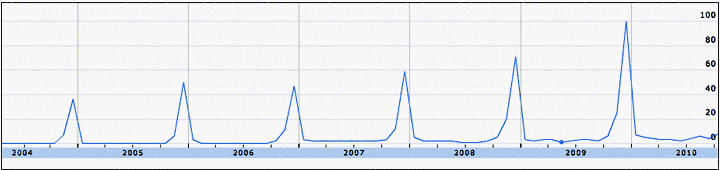
The riddle is not whether it's art but if it's any good to be serious, because where serious visual art of our time are kept to a minimum, silliness prevails. No year without a Santa Claus' reindeer. The artist is a receptacle for funny art ideas, question whereabout is Santa Claus real or fake, because mental images need to reach out to the outside world.
☞ ⧉
____